
Braces: Fixed Appliances
Braces: Fixed Appliances
Metal, Ceramic & Lingual Braces: Fixed Appliances in Gosford, Erina, & The Central Coast
Braces (whether metal braces, ceramic, lingual or clear aligners like Invisalign), third molars, appearance and bad breath are just a few new things for your teenagers to worry about as they make the transition from childhood to adulthood. The best way for teens to support a healthy smile and good oral health is to start good oral habits as early as when their first permanent tooth comes out at age 5-6 years old.
Orthodontics is the branch of dentistry that focuses on treating improperly positioned teeth and jaws. In other words, they address bite problems.
Who Needs Orthodontic Treatment?
Gapped teeth
Crooked/Crowded Teeth
Overbite
Underbite
Crossbite
Open Bite
Children With Narrow Dental Arches


Gapped teeth
Crooked/Crowded Teeth
Overbite
Underbite
Crossbite
Open Bite
Children With Narrow Dental Arches
Orthodontic Treatments
At Central Coast Orthodontics, we are able to choose from a wide variety of different orthodontic appliances, which means we help you select a suitable option to suit your needs and goals. These could include traditional metal braces, ceramic braces, or a range of removable appliances such as Invisalign plates or retainers.
Metal Braces
These are the metal brackets and wires most people picture when they hear the word “braces.” However, modern brackets are smaller and less noticeable than the notorious “metal-mouth” braces many adults remember. Plus, new heat-activated archwires use your body heat to help teeth move more efficiently, with reduced discomfort for many patients compared to older systems.
Ceramic Braces
Invisalign
Orthognathic Treatment
Orthognathic surgery is a corrective jaw surgery that straightens or realigns your jaw and addresses related skeletal concerns.
Space Maintainers
Expanders
Functional Appliances
Metal Braces
These are the metal brackets and wires most people picture when they hear the word “braces.” However, modern brackets are smaller and less noticeable than the notorious “metal-mouth” braces many adults remember. Plus, new heat-activated archwires use your body heat to help teeth move more efficiently, with reduced discomfort for many patients compared to older systems.
Ceramic Braces
Invisalign
Space Maintainers
Expanders
Orthognathic Treatment
Orthognathic surgery is a corrective jaw surgery that straightens or realigns your jaw and addresses related skeletal concerns.
Functional Appliances

“Start Young!”
The earliest we would generally consider treating a patient is around age eight, as this is typically when the six-year-old molars have erupted.
However, most treatment is done between the ages 11 and 14, depending on which teeth have come through and what stage of growth the patient is up to. Having said that, there is no actual age limit as to when an orthodontic treatment, such as braces or Invisalign, can be performed. There are usually several patients in their 60s and 70s, and even beyond, having active treatment in the practice at any given point.
A typical orthodontic case, whether it be with braces or aligners, usually takes around 18 months. Straightforward cases can take as little as nine to twelve months, while more complex cases may take about two years. Following active treatment, we would normally ask the patient to come back to the practice a few times a year for several years to check that everything is being maintained.
“Start Young!”

The earliest we would generally consider treating a patient is around age eight, as this is typically when the six-year-old molars have erupted.
However, most treatment is done between the ages 11 and 14, depending on which teeth have come through and what stage of growth the patient is up to. Having said that, there is no actual age limit as to when an orthodontic treatment, such as braces or Invisalign, can be performed. There are usually several patients in their 60s and 70s, and even beyond, having active treatment in the practice at any given point.
A typical orthodontic case, whether it be with braces or aligners, usually takes around 18 months. Straightforward cases can take as little as nine to twelve months, while more complex cases may take about two years. Following active treatment, we would normally ask the patient to come back to the practice a few times a year for several years to check that everything is being maintained.
What to Expect?
There is certain information patients should be aware of before undergoing orthodontic treatment with braces. First, it can be more challenging to clean the teeth with braces on, so extra time should be spent brushing the teeth and the braces. If plaque is left in place for too long, it can damage the teeth.
Second, certain foods can also be difficult to manage. For example, if you bite into something hard, it might cause a piece of the apparatus to become unglued, which would require an extra visit to have it repaired.

What to Expect?
There is certain information patients should be aware of before undergoing orthodontic treatment with metal braces, ceramic or lingual braces. First, it can be more challenging to clean the teeth with braces on, so extra time should be spent brushing the teeth and the braces. If plaque is left in place for too long, it can damage the teeth.
Second, certain foods can also be difficult to manage. For example, if you bite into something hard, it might cause a piece of the apparatus to become unglued, which would require an extra visit to have it repaired.
Lastly, it’s normal for patients to experience some discomfort during the treatment, and this is more common at the start rather than at the end. As the teeth start to move, they can feel sore, and the metal braces themselves can rub on the lips and cheeks. This usually diminishes with time, and there are some helpful adjuncts like wax, which can be stuck on the metal or ceramic braces to make them feel smooth during the initial days. Some of these issues are almost eliminated with clear aligners rather than ceramic or metal braces, which is why they’re becoming a more popular treatment choice.
Risks & Recovery
Braces are a common orthodontic treatment for alignment and bite correction, but they come with risks and recovery considerations.
Possible risks include:
- Gum irritation or mouth ulcers from brackets and wires
- Temporary discomfort after adjustments
- Difficulty cleaning teeth, which can increase the risk of cavities or gum inflammation
- Enamel decalcification or staining if oral hygiene is not maintained
- In some cases, root shortening may occur over time
Recovery considerations:
- Mild soreness is common for a few days after fitting or adjustments
- Patients usually adapt quickly to speaking and eating with braces
- A soft diet can help during the first few days of treatment
- Regular dental and orthodontic reviews are essential for monitoring progress
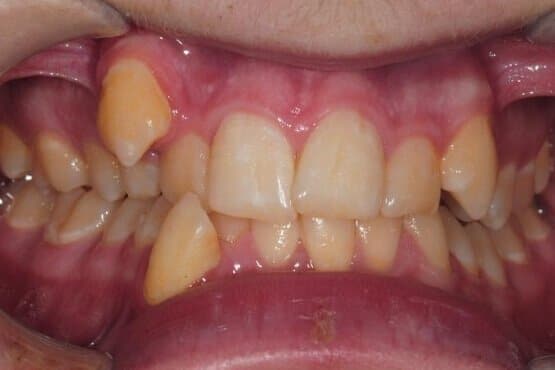
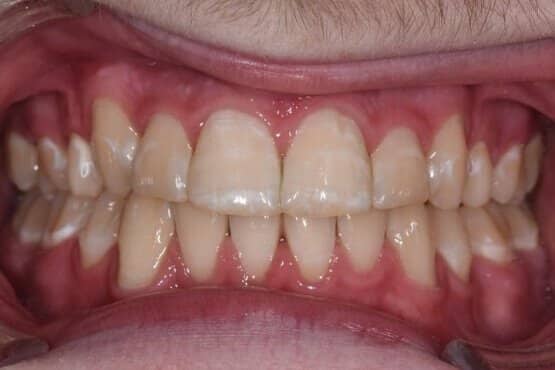
Timeframe Between Photos: 18 Months
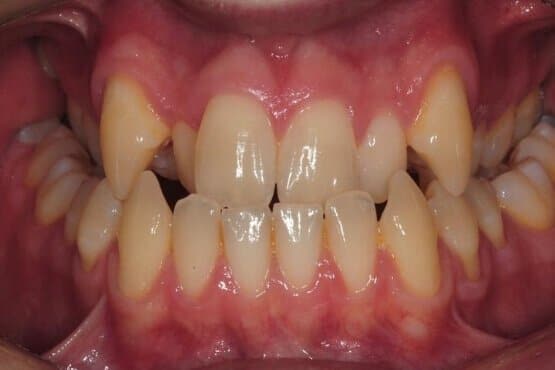
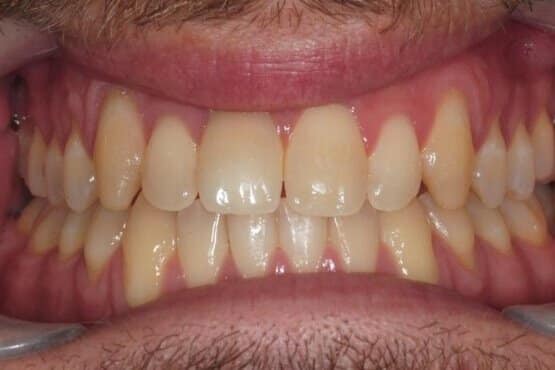
Timeframe Between Photos: 18 Months
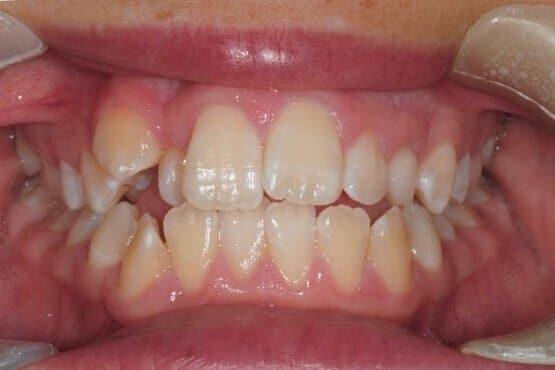
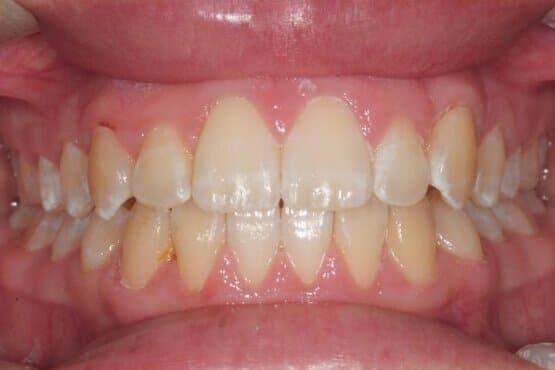
Timeframe Between Photos: 18 Months
Warning: The ‘before’ and ‘after’ images shown are of a real patient of our clinic. These images are for illustrative purposes only and do not represent the results that all patients can expect. Results vary depending on individual circumstances, and all surgical and cosmetic procedures carry risks.
Disclaimer: The outcomes shown are only relevant for this patient and do not necessarily reflect the results other patients may experience.

Contact Sports While Having Orthodontic Treatments
Teeth generally tend to be safer with braces or aligners in place, as they are all joined together. However, a knock to the mouth might still cause a cut to the lip or cheek. For this reason, those playing an active sport might consider using aligners rather than braces. However, even if you choose braces, it can still be protected using mouth guards.
Contact Sports While Having Orthodontic Treatments
Teeth generally tend to be safer with braces or aligners in place, as they are all joined together. However, a knock to the mouth might still cause a cut to the lip or cheek. For this reason, those playing an active sport might consider using aligners rather than braces. However, even if you choose braces, it can still be protected using mouth guards.
“I Want to Straighten My Teeth but Have Several Questions.”
We always encourage patients to ask lots of questions during their initial consultation because the more questions that get asked, the more assurance we have that the patient or parents understand the process, as well as the risks and limitations. This helps everyone make the best choice for the individual, as we have never met two sets of teeth or two personalities which are exactly the same.
If you want to start your journey to straighter teeth and better oral health, call us now or fill in the enquiry form below. Our Specialist Orthodontists would love to look after you and your family.

“I Want to Straighten My Teeth but Have Several Questions.”
We always encourage patients to ask lots of questions during their initial consultation because the more questions that get asked, the more assurance we have that the patient or parents understand the process, as well as the risks and limitations. This helps everyone make the best choice for the individual, as we have never met two sets of teeth or two personalities which are exactly the same.
If you want to start your journey to straighter teeth and better oral health, call us now or fill in the enquiry form below. Our Specialist Orthodontists would love to look after you and your family.

Download Our Price List
We understand some people can be concerned about the cost of their or their child's orthodontic treatment. At Central Coast Orthodontics, we want to ensure every patient can access a treatment plan suited to their needs and budget.
Simply click the button below and we will provide you with a competitive quotation based on our professional assessment of your individual situation.
FAQ About Braces: Fixed Appliances
Are there risks to teeth with braces?
Disclaimer: The material posted is for informational purposes only and is not intended to substitute for professional medical advice, diagnosis or treatment. Results vary with each patient. Any dental procedure carries risks and benefits. If you have any specific questions about any dental and/or medical matter, you should consult your dentist, physician or other professional healthcare providers.
Disclaimer: The outcomes shown are only relevant for this patient and do not necessarily reflect the results other patients may experience.