
Orthopaedic Treatment
Orthopaedic Treatment
Orthopaedic Treatment Gosford, Erina, Central Coast
You may have noticed that our doctors specialise in “orthodontics and dentofacial orthopaedics.” While most people have heard of orthodontics, many are confused by the dentofacial orthopaedics part of the title.
Most people think of orthodontics as a field in dentistry that focuses on moving teeth to address alignment. But orthodontists are also concerned with the position of specific facial bones that affect the shape and appearance of the jaws and face. Dentofacial orthopaedics is the field of dentistry that concentrates on addressing the position and dimensions of the bones that house the teeth.
The alignment of the teeth is heavily influenced by the size, shape and position of the top and bottom jaw. In a growing patient, these can be changed or altered which means the foundations are in better order to allow the teeth to meet together properly.
Jawbones Are as Important as Your Teeth
As a child grows, both the maxilla (upper jaw) and mandible (lower jaw) grow in a three-dimensional manner. This growth will decide the final positioning of the mid and lower face, as these bones are also connected to the sinuses, bottom of the nose and cheekbones.
Sometimes, the upper and lower jaws will grow at different rates and create alignment issues between the upper and lower teeth. For good jaw function, the upper jaw should have a more forward position and be a bit wider than the lower jaw.
Identifying Jaw Problems
As Specialist Orthodontists, Dr Alistair King and Dr Simon Deall are trained to identify orthopaedic problems, determine what can be done, and when is the best time to do it. Misaligned jaw growth can sometimes be identified as early as two years of age when all of a child’s primary teeth have come out. Here are some dental problems to look out for:
Gapped teeth
Crooked/Crowded Teeth
Overbite
Underbite
Crossbite
Open Bite
Children With Narrow Dental Arches

We will discuss with you if treatment is required and at what stage would be most appropriate. Occasionally, the optimal timing is during the stage of mixed dentition when some primary or baby teeth are still present, but the adult teeth have started to grow in. This usually happens by the time a child is around eight or nine.
Identifying Jaw Problems

As Specialist Orthodontists, Dr Alistair King and Dr Simon Deall are trained to identify orthopaedic problems, determine what can be done, and when is the best time to do it. Misaligned jaw growth can sometimes be identified as early as two years of age when all of a child’s primary teeth have come out. Here are some dental problems to look out for:
Gapped teeth
Crooked/Crowded Teeth
Overbite
Underbite
Crossbite
Open Bite
Children With Narrow Dental Arches
We will discuss with you if treatment is required and at what stage would be most appropriate. Occasionally, the optimal timing is during the stage of mixed dentition when some primary or baby teeth are still present, but the adult teeth have started to grow in. This usually happens by the time a child is around eight or nine.
Orthopaedic Treatments

Fixed expanders
The top and the bottom jaw can be moved or changed with varying degrees of predictability in all three planes of space. The most common movements to achieve is the widening of the upper jaw or maxilla. This is typically carried out via a fixed expander and is used to address a crossbite of the back teeth. Often during this procedure, more space is created so it can be a useful way of relieving crowding as well.

Functional appliance

Headgear
Historically, headgear, or cat’s whiskers, were commonly used to address overbites by pulling the top jaw back. While they are effective, this treatment method is much less common these days.
Orthopaedic Treatments

Fixed expanders
The top and the bottom jaw can be moved or changed with varying degrees of predictability in all three planes of space. The most common movements to achieve is the widening of the upper jaw or maxilla. This is typically carried out via a fixed expander and is used to address a crossbite of the back teeth. Often during this procedure, more space is created so it can be a useful way of relieving crowding as well.
Functional appliance
Headgear
Historically, headgear, or cat’s whiskers, were commonly used to address overbites by pulling the top jaw back. While they are effective, this treatment method is much less common these days.
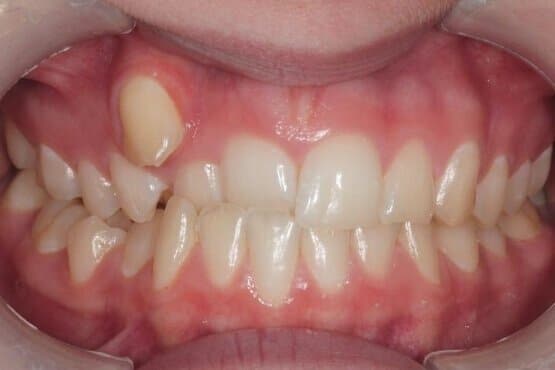
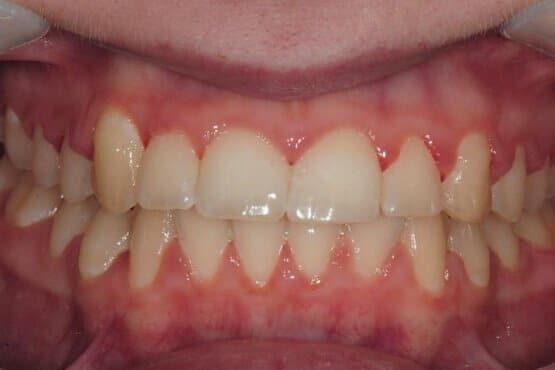
Timeframe Between Photos: 18 Months
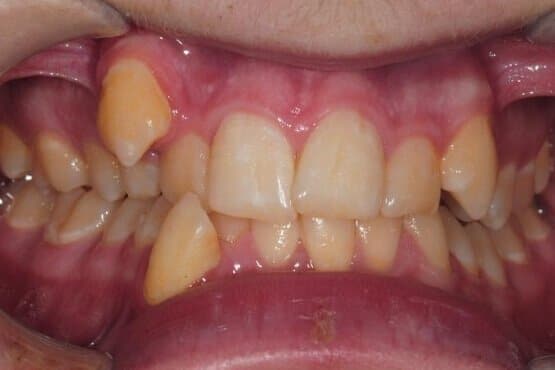
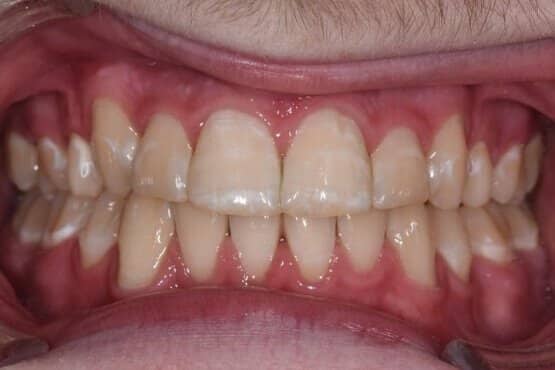
Timeframe Between Photos: 18 Months
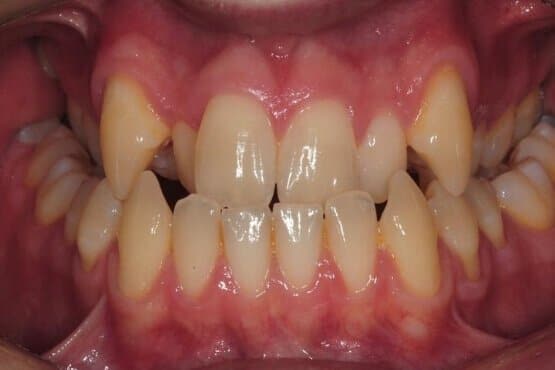
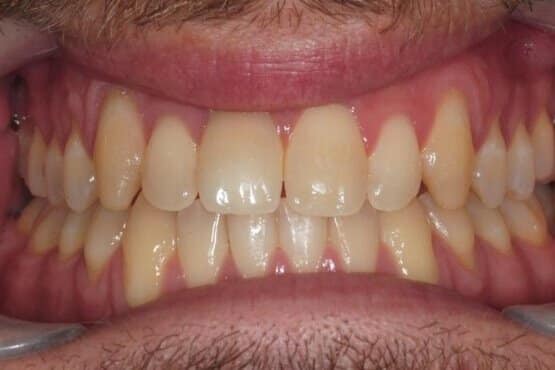
Timeframe Between Photos: 18 Months
Warning: The ‘before’ and ‘after’ images shown are of a real patient of our clinic. These images are for illustrative purposes only and do not represent the results that all patients can expect. Results vary depending on individual circumstances, and all surgical and cosmetic procedures carry risks.
Disclaimer: The outcomes shown are only relevant for this patient and do not necessarily reflect the results other patients may experience.
When Is the Best Time to Undergo Orthopaedic Treatments?
Depending on the particular type of movement required, the best time to carry each movement out can vary. For example, expanding the upper jaw is often better done at a younger age, whereas bringing the lower jaw forward to make sure the upper is more successful during the pubertal growth spurt years.
Once growth has finished, however, orthopaedic treatment becomes unrealistic, as the jawbones are no longer naturally growing. Other options need to be considered instead, such as involving jaw surgery or perhaps altering the goals or objectives of treatment as a compromise.
That’s why it’s important a thorough diagnosis is carried out before treatment begins to ensure a suitable treatment option is selected for each individual patient.
In addition, it is crucial to have a back-up plan if the normal growth response, or in some cases, compliance from the patient, is not as expected. This is why it’s important to have an experienced practitioner looking after you or your child while you’re undergoing treatment, as cases requiring orthopaedic correction, as well as orthodontic correction, tend to be reasonably complicated.

When Is the Best Time to Undergo Orthopaedic Treatments?
Depending on the particular type of movement required, the best time to carry each movement out can vary. For example, expanding the upper jaw is often better done at a younger age, whereas bringing the lower jaw forward to make sure the upper is more successful during the pubertal growth spurt years.
Once growth has finished, however, orthopaedic treatment becomes unrealistic, as the jawbones are no longer naturally growing. Other options need to be considered instead, such as involving jaw surgery or perhaps altering the goals or objectives of treatment as a compromise.
That’s why it’s important a thorough diagnosis is carried out before treatment begins to ensure a suitable treatment option is selected for each individual patient.
In addition, it is crucial to have a back-up plan if the normal growth response, or in some cases, compliance from the patient, is not as expected. This is why it’s important to have an experienced practitioner looking after you or your child while you’re undergoing treatment, as cases requiring orthopaedic correction, as well as orthodontic correction, tend to be reasonably complicated.
Get started now!

Get started now!
It is vital to have your child evaluated by an orthodontist from an early age for any potential issues in the development and growth of their jaw. Early diagnosis and treatment can have a lasting benefit on the appearance and function of their teeth.
Our Specialist Orthodontists Dr King and Dr Deall will be able to diagnose any misalignments in the teeth and jaws and can devise a treatment plan that integrates both orthodontic and dentofacial orthopaedic treatments. Call us now or fill in the enquiry form below to get started with you or your child’s orthopaedic treatment.

Download Our Price List
We understand some people can be concerned about the cost of their or their child's orthodontic treatment. At Central Coast Orthodontics, we want to ensure every patient can access a treatment plan suited to their needs and budget.
Simply click the button below and we will provide you with a competitive quotation based on our professional assessment of your individual situation.
Disclaimer: The material posted is for informational purposes only and is not intended to substitute for professional medical advice, diagnosis or treatment. Results vary with each patient. Any dental procedure carries risks and benefits. If you have any specific questions about any dental and/or medical matter, you should consult your dentist, physician or other professional healthcare providers.
Disclaimer: The outcomes shown are only relevant for this patient and do not necessarily reflect the results other patients may experience.