
Complex Dental Anomaly Treatment
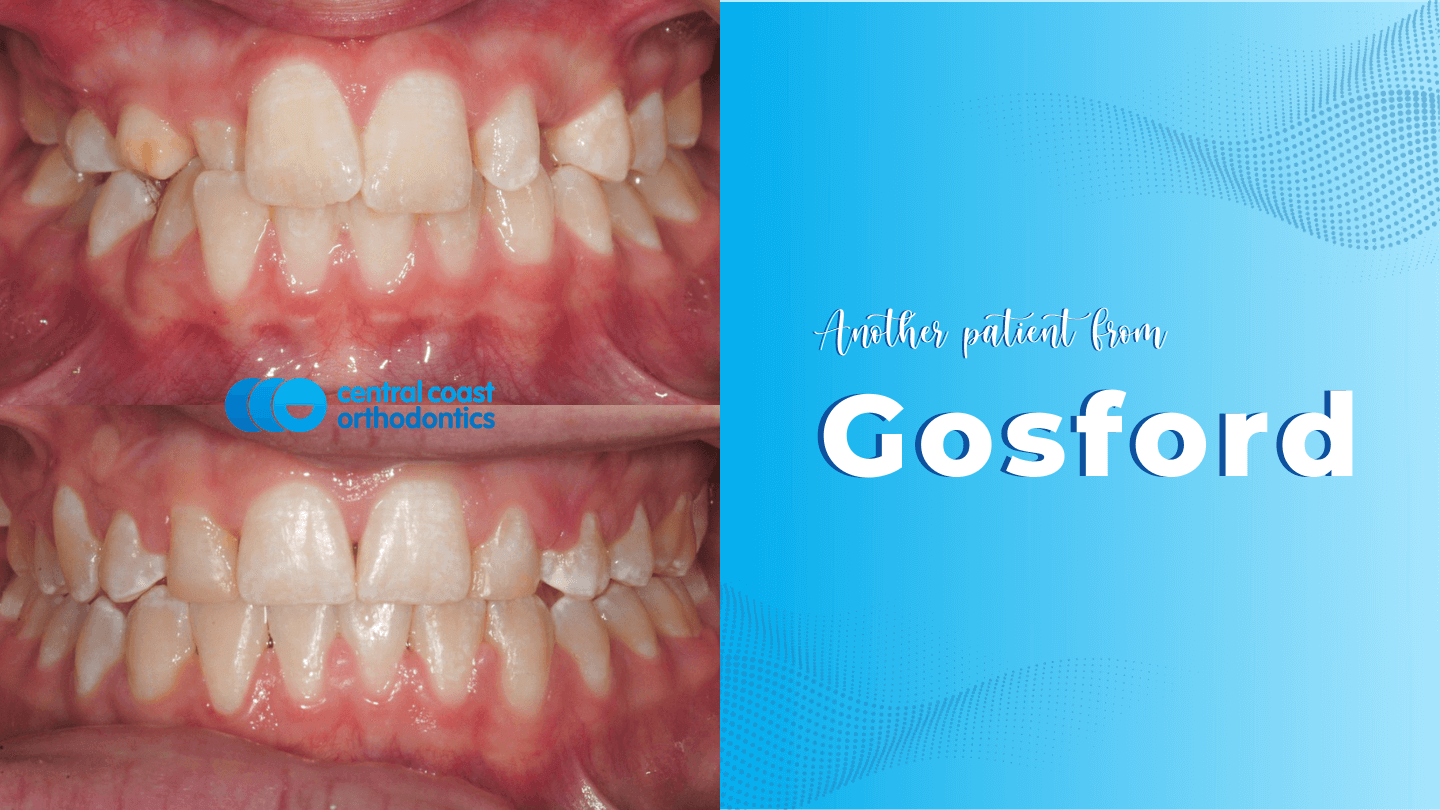
How are complex dental anomalies treated in early adolescents in Gosford?
Case Note ID: November-2022-CA
Location: Central Coast Orthodontics (serving the Gosford area)
Primary Treatments: Metal Braces, Surgical Tooth Removal, Complex Movement Mechanics
Supporting Technology: Digital Diagnostic Imaging, Specialised Orthodontic Mechanics
Presenting Clinical Problem
A 13-year-old patient presented with multiple dental anomalies requiring comprehensive intervention to establish proper permanent dentition alignment.
- Retained Primary Teeth: Deciduous teeth remaining beyond normal exfoliation timing, preventing permanent tooth eruption
- Tooth Transposition: Two permanent teeth occupying reversed positions within the dental arch
- Impacted Tooth: Permanent tooth unable to erupt due to mechanical obstruction or malposition
The primary clinical objective was to facilitate proper permanent tooth eruption through strategic primary tooth removal whilst managing tooth transposition and impaction through systematic orthodontic intervention.
Treatment Plan & Clinical Process
A comprehensive treatment plan was developed to address multiple developmental anomalies through coordinated surgical and orthodontic intervention.
Phase 1: Diagnostic Planning: Detailed clinical and radiographic assessment evaluated the position of retained primary teeth, transposed permanent teeth, and impacted tooth. Treatment planning determined optimal timing for primary tooth extraction and orthodontic mechanics required for complex tooth movement.
Phase 2: Strategic Extraction and Comprehensive Treatment: Retained primary teeth were surgically removed to eliminate eruption barriers for permanent teeth. Metal braces were placed with specialised mechanics designed to manage tooth transposition and guide impacted tooth eruption. Treatment protocol involved complex three-dimensional tooth movement whilst maintaining overall arch integrity. The 24-month treatment duration reflected the complexity of managing multiple developmental anomalies.
Phase 3: Stability Verification: Treatment completion focused on confirming proper permanent dentition positioning, functional occlusion, and establishing comprehensive retention protocols.
Clinical Outcome
The treatment successfully addressed the multiple dental anomalies through coordinated surgical-orthodontic intervention. Removal of retained primary teeth facilitated proper permanent tooth eruption. Complex orthodontic mechanics managed tooth transposition whilst addressing the impacted tooth. Comprehensive treatment established functional permanent dentition alignment.
Treatment outcomes depend on individual patient characteristics, anomaly severity, biological response to tooth movement, and retention compliance. Individual responses vary, and outcomes experienced by one patient do not necessarily reflect results others may experience.
Frequently Asked Questions for Gosford Patients
What causes teeth to become impacted or transposed?
Tooth impaction can result from space deficiency, abnormal eruption paths, prolonged primary tooth retention, or developmental variations. Tooth transposition occurs during development when permanent teeth exchange positions, often due to eruption path deviations. Comprehensive diagnostic assessment determines specific causative factors.
When should retained primary teeth be removed in the Gosford area?
Primary tooth removal timing depends on permanent tooth development stage and eruption potential. Prolonged primary tooth retention may prevent permanent tooth eruption or cause developmental problems. Regular dental monitoring allows timely identification of retention problems and appropriate intervention timing.
How does tooth transposition affect orthodontic treatment?
Tooth transposition increases treatment complexity as teeth require movement to non-typical positions or acceptance of the transposed positions. Treatment planning must consider root proximity, movement limitations, and functional objectives. Specialised orthodontic mechanics and extended treatment duration are typically required.
Learn More About
More Patient Journeys

Patient of Killarney Vale’s Invisalign Makeover
A patient from Killarney Vale straightened his teeth and improved his bite with Invisalign in just 6 months. See his incredible transformation with 20 aligners!

Patient of Wyee’s Invisalign Makeover
A mum from Wyee straightened her teeth and improved her bite with Invisalign and interproximal reduction. See her incredible 20-month transformation at Central Coast Orthodontics!